Best Home Recovery Equipment for Athletes: 2026 Guide
Table of Contents
- Quick Comparison: Top Home Recovery Equipment
- How We Selected the Best Home Recovery Equipment
- 1. Best for Cold Immersion: RevX Acrylic X Tub Cold Plunge
- 2. Best Portable Cold Plunge: 248-Gallon Ice Bath Tub
- 3. Best for Red Light Therapy: ULTRA1500 Panel
- 4. Best for Heat Therapy: 3-Person Cedar Infrared Sauna
- The Benefits of Cold Plunge for Athletes
- How to Use Red Light Therapy for Muscle Recovery
- Frequently Asked Questions
Last Updated: September 16, 2026
Quick Comparison: Top Home Recovery Equipment
The best home recovery equipment for athletes splits into four categories: cold immersion, red light therapy, infrared heat, and percussive or manual tools. This guide breaks down which setup fits which athlete, what it costs, and how to use it.
Cold water immersion remains the most researched method for reducing delayed onset muscle soreness, or DOMS. Red light therapy panels support tissue repair and blood flow circulation. Infrared saunas drive vasodilation and lymphatic drainage. Percussion and manual tools handle myofascial release.
The picks below range from a $1,359 portable plunge to a $28,000 full-spectrum recovery pod, so there's a price point for most home setups.
| Category | Product | Price | Best For |
|---|---|---|---|
| Cold immersion | RevX Acrylic X Tub + LUX Chiller | $7,500 | Serious daily cold plungers |
| Portable cold plunge | 248-Gallon Inflatable Ice Bath Tub | $1,359 | Small spaces, travel |
| Red light therapy | ULTRA1500 Full Body Panel | $1,739 | Full-body muscle recovery |
| Heat therapy | 3-Person Cedar FAR Infrared Sauna | $5,189 | Post-training heat sessions |
| Manual recovery | 4D Zero Gravity Massage Chair | $1,979.68 | Passive recovery, chronic tension |
How We Selected the Best Home Recovery Equipment
Every pick here had to clear four tests: built for daily use, publishing specifications that hold up to scrutiny, serving a distinct recovery modality, and serviceable, meaning replacement parts, filters, or panels are obtainable.

We prioritized durability over feature count. A cold plunge with a failing chiller is an expensive bathtub; a red light panel with inconsistent wavelength output is a desk lamp with extra steps.
The four selection criteria, in detail
1. Daily-use durability. Recovery gear fails in predictable places: chiller compressors, inflatable seams, LED drivers, and sauna heating elements. We favored units with published compressor horsepower, panel counts, and warranty terms over vague "premium materials" claims.
2. Verifiable specifications. Cold plunge means published chiller horsepower, temperature range, and insulation thickness. Red light means named wavelengths, LED count, and beam angle. Sauna means heater type, panel count, and electrical requirements. If a spec sheet is missing, the product is missing from this list.
3. Distinct modality. Cold immersion handles inflammation and DOMS.
Maintenance reality check by category
| Category | Routine maintenance | Typical failure point |
|---|---|---|
| Cold plunge | Replace or clean filters every 2-4 weeks; sanitize water; inspect chiller vents | Compressor or chiller coil |
| Inflatable tub | Check seams and valves monthly; dry fully before storing | Seam leaks at the base |
| Red light panel | Dust LEDs and fans; keep vents clear; avoid humid rooms | LED driver or cooling fan |
| Infrared sauna | Wipe benches after sessions; vacuum heater vents; check the circuit | Heating element or control board |
| Manual tools | Wash with mild soap; inspect for cracks | Foam breakdown or ball splitting |
When NOT to use recovery equipment
A common mistake is chasing the cheapest option in each category, ending up with a garage full of gear that breaks within a year or sits unused. The picks below are the ones we'd put in a home studio we actually train in, and expect to still be running after three years of daily use.

1. Best for Cold Immersion: RevX Acrylic X Tub Cold Plunge
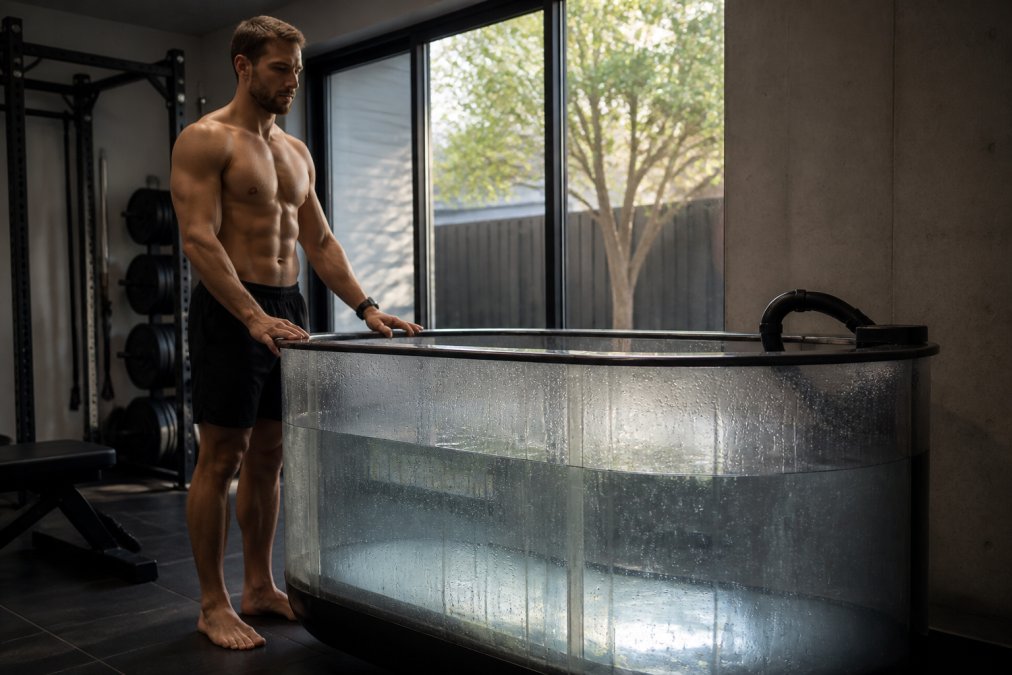
The RevX Acrylic X Tub is over 34 inches tall, allowing full above-the-shoulder submersion while staying upright.
Pros:
- Deepest acrylic tub available, full shoulder submersion
- Dual-mode chiller covers cold and heat in one unit
- Insulated walls hold temperature with less compressor cycling
Cons:
- Highest price point in the cold plunge category
- Not portable once installed
2. Best Portable Cold Plunge: 248-Gallon Ice Bath Tub
Portability is the entire point of this tub. It inflates in about 2 minutes, deflates into a carry bag, and holds 248 gallons across a 52.8 x 26.0 x 29.5 inch interior, enough for full-length adult use without bending your legs.
Pros:
- Inflates in 2 minutes, stores in a carry bag
- WiFi control and 99-hour scheduling
- Full-length fit for adults
Cons:
RevX Acrylic X Tub Cold Plunge + LUX →
- Less heat retention than rigid acrylic
- Requires periodic re-inflation checks
3. Best for Red Light Therapy: ULTRA1500 Panel
The ULTRA1500 is a full-body red light therapy panel with 300 quad-chip LEDs across four wavelengths: 630nm, 660nm, 810nm, and 850nm. That covers both red and near-infrared output, what you want for muscle recovery rather than skin-only treatments.
4. Best for Heat Therapy: 3-Person Cedar Infrared Sauna
Heat therapy drives vasodilation and lymphatic drainage, and this 3-person FAR infrared sauna in Canadian Red Cedar delivers it with nine carbon heating panels running 30% larger than ceramic heaters. The panels penetrate 40% deeper into the skin and never require replacement.
Pros:
- Cedar construction with strong heat retention
- Nine oversized carbon panels, no replacement needed
- Chromotherapy and audio built in
Cons:
- Requires dedicated indoor space and 20A circuit
The Benefits of Cold Plunge for Athletes
Cold water immersion reduces inflammation and eases delayed onset muscle soreness after intense training. Cold exposure constricts blood vessels, then triggers vasodilation as you rewarm, helping flush metabolic waste and supporting blood flow circulation.
- DOMS reduction: Cold immersion after heavy sessions can blunt next-day soreness, which matters most during back-to-back training blocks.
- Inflammation control: Short, controlled cold exposure helps manage acute inflammation from hard efforts.
- Neuromuscular recovery: Cold water can help settle an overstimulated nervous system after competition.
- Mental reset: A brief plunge sharpens focus and gives a clear psychological marker between training and rest.
How to Use Red Light Therapy for Muscle Recovery
Red light therapy for muscle recovery delivers red and near-infrared wavelengths to tissue, supporting cellular energy production and tissue repair. Sessions are short, non-invasive, and easy to stack into an existing routine. The real question is not how to use it, it is when, and alongside what.
A practical red light protocol
- Position the panel 6 to 12 inches from the target area, or use a full-body panel at standing distance.
- Set session length between 10 and 20 minutes per area.
- Use continuous mode for general recovery; try pulse mode for focused work on a specific muscle group.
- Aim for consistency over intensity. Daily short sessions beat occasional long ones.
- Track how you feel across two to three weeks before judging results.
Sport-specific recovery stacks
The right combination of tools depends on what your sport actually breaks down.

Using wearable data to decide what to use today
If you already wear a device that tracks heart rate variability (HRV) and sleep, you have a decision tool most athletes ignore:
- HRV trending down, sleep poor: favor low-intensity tools, red light, compression boots, heat, manual release. Skip the cold plunge and high-intensity sessions.
- HRV stable or trending up, sleep good: you can use aggressive tools, cold immersion, percussion, and a full training load.
- HRV flat but you feel wrecked: trust the subjective signal and treat it as a down day. Wearables are a guide, not a verdict.
How long should you use recovery tools for best results?
Most recovery tools work best in short, consistent sessions rather than long, occasional ones. Cold plunge sessions typically run 2 to 10 minutes depending on water temperature, red light 10 to 20 minutes per area, infrared sauna 20 to 40 minutes, and percussion 1 to 2 minute passes per muscle group. Consistency across weeks matters more than any single long session.
heart rate variability and recovery guidance
Frequently Asked Questions
What are the most effective recovery devices for home use?
The most effective home recovery equipment depends on your primary goals. For inflammation and circulation, cold plunges like the RevX Acrylic X Tub are excellent. For muscle pain and tissue repair, red light therapy panels such as the ULTRA1500 are highly effective. Infrared saunas are great for relaxation and detoxification. Combining these tools allows you to address different aspects of recovery, from acute post-workout soreness to long-term stress management.
What are the benefits of cold plunge therapy for athletes?
Cold plunge therapy offers several benefits for athletes. It can reduce inflammation and swelling by constricting blood vessels, which helps decrease delayed onset muscle soreness (DOMS). Additionally, regular cold exposure can enhance blood flow circulation and lymphatic drainage, supporting faster tissue repair and neuromuscular recovery after intense training sessions.
Is red light therapy effective for muscle recovery?
Yes, red light therapy is effective for muscle recovery. It uses specific wavelengths of red and near-infrared light to penetrate the skin and stimulate cellular energy production. This can reduce inflammation, accelerate tissue repair, and decrease muscle fatigue. To use it for recovery, aim the panel at the targeted muscle group for 10-20 minutes per session. The ULTRA1500 panel offers multiple wavelengths to support these recovery processes.
How often should athletes use recovery equipment?
The frequency of use depends on the tool. Cold plunges can be used daily, often for 2-10 minutes per session following a workout. Red light therapy is typically used 3-5 times per week for 10-20 minutes per area. Infrared saunas are often used 2-4 times per week for 15-30 minutes. It's important to listen to your body and adjust based on your training intensity and recovery needs. Consistency is key for best results.