Cold Plunge vs Sauna for Recovery: Which Works Best
Table of Contents
- Cold Plunge vs Sauna: The Core Difference
- How Cold Water Immersion Affects Recovery
- How Heat Therapy and Sauna Sessions Work
- Cold Plunge Duration for Recovery and Safety
- Sauna and Cold Plunge Protocol: Contrast Therapy
- Sauna Equipment Costs and Maintenance:
- Cold Plunge Equipment Costs and Maintenance:
- Benefits of Contrast Therapy for Muscle Recovery
- Cold Plunge vs Sauna: Which Should You Choose
- Frequently Asked Questions
Last Updated: September 18, 2026
Cold Plunge vs Sauna: The Core Difference
Cold plunge vs sauna represent opposing physiological strategies: cold water immersion triggers vasoconstriction while heat therapy causes vasodilation, creating different recovery outcomes.

Cold plunges excel at reducing immediate inflammation; saunas excel at promoting muscle repair through heat shock proteins and parasympathetic activation.
How Cold Water Immersion Affects Recovery
Cold water immersion below 60°F activates the sympathetic nervous system, releasing norepinephrine and adrenaline, which sharpens focus and elevates mood.
Post-immersion vasodilation delivers oxygen and nutrients while removing metabolic waste. Many athletes report reduced DOMS when using cold water immersion within 2-4 hours post-workout.
Cold plunge duration typically ranges from 2-5 minutes at 50-59°F. Shorter durations (2-3 minutes) suit beginners; longer sessions (4-5 minutes) require adaptation and carry higher cardiovascular stress.
Cold water immersion works best for acute inflammation; for chronic soreness or deep tissue repair, heat therapy produces better outcomes.
How Heat Therapy and Sauna Sessions Work
Heat therapy activates heat shock proteins that repair damaged proteins and reduce inflammation after 15-20 minutes at 160-180°F.
Sauna sessions activate the parasympathetic nervous system, dilating blood vessels to increase blood flow and promote nutrient delivery and metabolic waste removal.

Sauna sessions trigger endorphin release and improve mood while strengthening cardiovascular function; regular users show improved arterial flexibility and lower resting heart rates.
Optimal sauna duration is 15-30 minutes, 3-4 times weekly. Consistency matters more than duration; regular use produces better adaptations than occasional long sessions.
Cold Plunge Duration for Recovery and Safety
Start with 1-2 minutes at 55-59°F. After 2-3 weeks, extend to 3-4 minutes if tolerated well.
Water below 50°F demands shorter exposure (max 3 minutes); water between 50-59°F allows longer sessions.
Cold water immersion increases blood pressure and heart rate acutely. Consult a physician if you have hypertension, heart disease, arrhythmias, pregnancy, or fever. Wait 30-60 minutes after intense exercise before cold plunging.
Practice slow, controlled breathing before entering. Involuntary gasping is normal; gradual adaptation over weeks reduces shock.
Portable cold plunges like the Drift Inflatable Cold Plunge with WiFi app control offer temperature precision that removes variables from your protocol.

Sauna and Cold Plunge Protocol: Contrast Therapy
Contrast therapy alternates heat and cold: 15-20 minutes sauna (160-180°F), 2-3 minute cool-down, 2-3 minutes cold water (50-59°F). Repeat 3-5 cycles, always ending with cold.
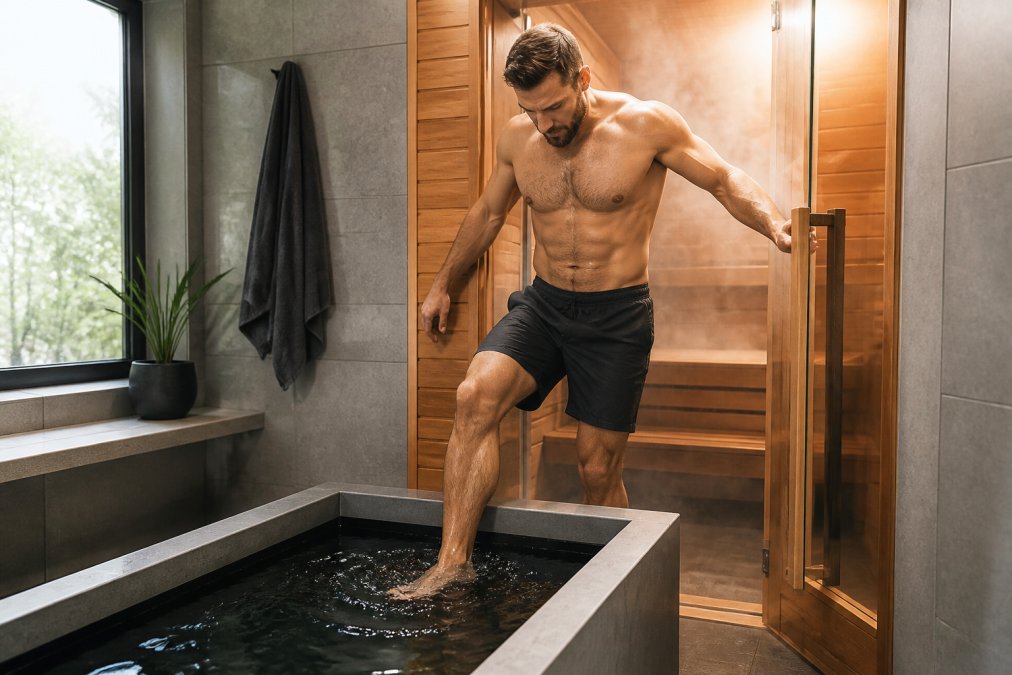
Repeated circulatory shifts flush metabolic waste more effectively, creating a "pumping" effect that accelerates recovery. Heat shock proteins activate during sauna, then cold immersion extends their therapeutic window.
Athletes report faster recovery between sessions, reduced fatigue, and improved focus. The endorphin and norepinephrine surge creates powerful mood elevation.
The Contrast Therapy Protocol: Step-by-Step
-
Warm-up phase (5 minutes): Begin in the sauna at 160-170°F. Allow your core temperature to rise and muscles to warm. This phase primes your cardiovascular system and prevents the shock of immediate cold exposure.
-
First heat cycle (15-20 minutes): Increase sauna temperature to 170-180°F. Stay until you reach light perspiration. Do not exceed 20 minutes on your first cycle.
-
First cold cycle (2-3 minutes): Exit the sauna and cool down for 1-2 minutes (shower or air exposure), then immerse in cold water at 50-59°F for 2-3 minutes. Focus on controlled breathing. This is where the vasodilation-to-vasoconstriction shift occurs.
-
Recovery phase (3-5 minutes): Exit the cold plunge and rest. Allow your heart rate to normalize and drink water.
-
Repeat cycles (3-5 total): Return to the sauna for 15 minutes, then cold for 2-3 minutes. Most athletes perform 3-4 cycles total. Each cycle becomes easier as your body adapts.
-
Final cold finish (2-3 minutes): Always end with cold water immersion. This maximizes the recovery stimulus and reduces inflammation. Ending with heat negates the anti-inflammatory benefit.
-
Cool-down (10-15 minutes): Exit the cold plunge and rest in a warm environment. Wrap in a towel, drink water, and allow your nervous system to settle.
Sequencing Rules
Never begin with cold, unprepared muscles increase injury risk. Never end with heat, ending with cold maximizes recovery stimulus and reduces inflammation.
Recovery Timeline After Contrast Therapy
Optimal frequency is 2-3 times weekly on non-consecutive days. Parasympathetic activation persists 12-24 hours, improving sleep.
Home Equipment Considerations and Long-Term Costs
Sauna Equipment Costs and Maintenance:
- Water usage: Minimal (only for cooling between cycles)
Cold Plunge Equipment Costs and Maintenance:
Total First-Year Cost for Home Contrast Therapy Setup:
- Infrared sauna + iceless cold plunge: $5,000-$14,000 initial
- Monthly operating cost: $35-$100 (electricity, water, maintenance)
- Annual cost: $4,200-$13,200
Cost-to-Benefit Analysis by User Profile:
High-volume athletes (10+ hours weekly): Home equipment pays for itself within 12-18 months. Recreational athletes (5-8 hours weekly): Cost-effective if committing to 2-3 sessions weekly; otherwise use professional facilities. Wellness enthusiasts (3-5 hours weekly): A single modality is more practical; professional facilities are more cost-effective than home equipment.
Practical Sustainability Factors:
Maximizing ROI on Contrast Therapy Equipment:
Commit to 2-3 sessions weekly for 12+ months and track recovery metrics to confirm benefits. If using fewer than 2 times weekly, professional facilities are more cost-effective.
Benefits of Contrast Therapy for Muscle Recovery
Contrast therapy produces measurable improvements in muscle soreness and recovery speed. Athletes report reduced DOMS 24-48 hours post-workout when performed within 2 hours of training. The alternating approach is gentler than prolonged exposure to either extreme.
Cold Plunge vs Sauna: Which Should You Choose
The choice between cold plunge vs sauna depends on your specific recovery goal, training phase, and health status. A structured decision matrix helps you identify which modality aligns with your actual recovery needs.
Recovery Profile 1: Strength and Hypertrophy Athletes If you train with heavy resistance 4-6 days per week and prioritize muscle growth, cold water immersion alone may blunt hypertrophy gains. Cold immersion reduces inflammation acutely, but excessive inflammation reduction can suppress the mTOR pathway and heat shock protein activation that drive muscle protein synthesis. For this profile, sauna therapy (15-20 minutes, 3-4 times weekly) is superior because heat shock proteins enhance muscle repair without suppressing the anabolic signaling cascade. If you use cold plunges at all, limit them to 2-3 minutes within 30-60 minutes post-workout, and prioritize sauna sessions on non-training days or 24+ hours after heavy leg sessions.
Recovery Profile 2: Endurance and Aerobic Athletes If you log 8+ hours of aerobic training weekly (running, cycling, swimming), your primary recovery need is cardiovascular adaptation and lactate clearance. Cold water immersion (3-4 minutes at 50-59°F) within 2-4 hours post-workout accelerates lactate removal and reduces DOMS without suppressing aerobic adaptations. Sauna therapy complements this by improving arterial flexibility and parasympathetic recovery, but should be used on easy training days, not immediately after high-intensity intervals. Contrast therapy (sauna → cold → sauna cycle) 1-2 times weekly on recovery days produces the best outcome for endurance athletes, as it maximizes blood flow adaptation without interfering with training stimulus.
Recovery Profile 3: High-Frequency, Mixed-Modality Training If you combine strength, power, and conditioning work in the same week (CrossFit-style, functional fitness, or sport-specific training), your recovery needs are contradictory: you need acute inflammation reduction from cold, but also deep tissue repair from heat. This is where contrast therapy becomes essential. A full contrast therapy protocol (45 minutes, 2-3 times weekly) performed 4-6 hours post-training maximizes both vasodilation and vasoconstriction benefits without interfering with either strength or aerobic adaptations. The key is timing: never perform contrast therapy within 2 hours of heavy training, as the thermal stress compounds training fatigue.
Recovery Profile 4: Injury Recovery and Chronic Pain Management If you're recovering from acute injury (sprain, muscle strain) or managing chronic pain (arthritis, tendinitis), the choice depends on the injury phase. Acute phase (0-3 days post-injury): cold water immersion (2-3 minutes at 55-59°F) reduces swelling and pain. Subacute phase (3-14 days): alternate between cold (for swelling) and sauna (for tissue repair), but avoid contrast therapy until pain subsides. Chronic phase (14+ days): sauna therapy (20-30 minutes, 4-5 times weekly) becomes primary, as sustained heat improves collagen remodeling and reduces stiffness. Cold plunges can resume once pain-free movement is restored, but at reduced frequency (1-2 times weekly) to avoid re-triggering inflammation.
Recovery Profile 5: Stress Reduction and Mental Health If your primary goal is stress reduction, mood elevation, and nervous system recovery rather than physical performance, sauna therapy is superior.
| Training Type | Primary Goal | Best Modality | Frequency | Timing |
|---|---|---|---|---|
| Strength/Hypertrophy | Muscle growth | Sauna | 3-4x weekly | Non-training days |
| Endurance | Lactate clearance | Cold plunge | Post-workout | 2-4 hours post |
| Mixed/CrossFit | Balanced recovery | Contrast therapy | 2-3x weekly | 4-6 hours post |
| Injury recovery (acute) | Swelling reduction | Cold plunge | Daily | Immediately post-injury |
| Injury recovery (chronic) | Tissue repair | Sauna | 4-5x weekly | Any time |
| Stress/mental health | Mood elevation | Sauna | 3-4x weekly | Evening |
| Sport-specific | Sport-dependent | Consult coach | Varies | Varies |
Frequently Asked Questions
Should I take a cold plunge or a sauna first?
Start with the sauna to warm muscles and increase blood flow, then move to cold water immersion. This sequence primes your body for the cold shock and maximizes the contrast therapy effect. The warm-to-cold transition triggers stronger vasodilation and vasoconstriction cycles, enhancing recovery kinetics and reducing delayed onset muscle soreness (DOMS) more effectively than either method alone.
What is the optimal cold plunge duration for recovery?
Most athletes benefit from 2 to 5 minutes of cold water immersion at temperatures between 50°F and 59°F. Beginners should start with 1 to 2 minutes and gradually increase. Durations longer than 10 minutes offer diminishing returns and increase risk of hypothermia. Cold plunges lasting 3 minutes at 50°F trigger significant norepinephrine release and reduce systemic inflammation without excessive stress on the cardiovascular system.
Can you do a sauna and cold plunge in the same session?
Yes, this is called contrast therapy and is highly effective for recovery. Alternate between sauna heat (10 to 15 minutes at 140°F to 160°F) and cold immersion (2 to 5 minutes at 50°F to 59°F) for 3 to 4 cycles. This protocol maximizes blood flow changes, enhances heat shock protein production, and improves parasympathetic nervous system activation. Allow 2 to 3 minutes of rest between cycles.
How does contrast therapy impact muscle soreness compared to cold plunge or sauna alone?
Contrast therapy reduces delayed onset muscle soreness (DOMS) more effectively than either method alone. The alternating vasodilation and vasoconstriction cycles accelerate cellular repair, flush metabolic waste, and boost endorphin release. The combined thermal stress optimizes homeostasis and hormonal balance.