Red Light Therapy vs Spa: Cost, Efficacy, and Home Setup
Table of Contents
- Red Light Therapy vs Spa: The Core Differences
- Cost of Red Light Therapy Sessions: Professional Spa vs At-Home
- How Photobiomodulation Delivers Cellular Regeneration
- Best Red Light Therapy Panels 2026: Equipment Comparison
- Red Light Therapy Treatment Frequency: Session Protocols and Results
- Skin Health, Muscle Recovery, and Wellness Benefits
- Safety, Contraindications, and Long-Term Durability
- Home Device vs Professional Spa: Which Makes Financial Sense
- Frequently Asked Questions
Last Updated: October 2, 2026
Red Light Therapy vs Spa: The Core Differences
When comparing red light therapy vs spa treatments, the choice comes down to lifestyle, budget, and whether you want cumulative results over months or immediate sessions.
Red light therapy uses specific wavelengths (630nm to 850nm) to stimulate cellular regeneration at the mitochondrial level, a daily protocol you own. Professional spas offer immediate relaxation and hands-on treatments but require ongoing appointments and travel time.
Most people start with occasional spa visits, then realize they want consistent, daily access to recovery without scheduling friction. That's where the comparison gets interesting.
Cost of Red Light Therapy Sessions: Professional Spa vs At-Home
Professional red light therapy sessions at wellness spas typically range from $75 to $150 per session. Booking 2-4 sessions weekly adds up to $600 to $2,400 monthly.
At-home red light therapy panels eliminate per-session costs. The Sport Gains ULTRA360 costs $1,019; the ULTRA1500 full-body panel is $1,739. At two weekly spa sessions, you break even in 4-6 months. After that, every session is free.

The Illuminate Red V2 ($2,295) delivers 5-minute sessions versus 30-60 minutes at most spas. The professional-grade Lumara PRO ($15,499) is built for med spas and clinics, not home use.
The real cost is consistency you'll maintain. A $1,700 panel used daily for three years costs roughly $1.50 per session. A $100 spa session booked sporadically costs far more per completed session.
| Option | Initial Cost | Cost Per Session (Year 1) | Cost Per Session (Year 3) | Best For | | --- | --- | --- | --- | | Spa visits (2x/week) | $0 | $37-75 | $37-75 | Occasional recovery, professional guidance | | ULTRA360 home panel | $1,019 | $9.80 | $3.27 | Daily home use, compact space | | ULTRA1500 full-body panel | $1,739 | $16.72 | $5.57 | Full-body coverage, family use | | Illuminate Red V2 | $2,295 | $22.06 | $7.35 | Fast 5-minute sessions, professional quality |
How Photobiomodulation Delivers Cellular Regeneration
Photobiomodulation is how red and near-infrared light wavelengths stimulate mitochondrial function and tissue repair. Light at specific wavelengths (630nm red light and 810nm to 850nm near-infrared) energizes mitochondria to produce more ATP, the energy currency cells use for repair and regeneration.
The 630nm and 660nm red wavelengths penetrate skin and support collagen and elastin production, making red light therapy standard for skin rejuvenation. The 810nm and 850nm near-infrared wavelengths penetrate deeper into muscle and bone, supporting recovery and inflammation reduction.
The Sport Gains ULTRA360 uses 72 quad-chip LEDs; the ULTRA1500 uses 300 for wider coverage. More LEDs mean more photons and faster cellular response. The Illuminate Red V2 focuses on a single 660nm wavelength with 1,980 micro-LEDs, prioritizing depth and speed.

Professional spas can't replicate this consistency. Red light therapy at a spa uses the same technology as at home; the difference is frequency and convenience, not efficacy.
Best Red Light Therapy Panels 2026: Equipment Comparison
Compact Multi-Wavelength Panels for Daily Use
The ULTRA360 is the entry point for home red light therapy. At 18 x 11.57 x 6.97 inches and 11.7 pounds, it fits on a desk or wall mount. The 72 quad-chip LEDs deliver all four wavelengths needed for skin health and muscle recovery, with touchscreen controls for brightness and timing.
At $1,019, it's the most accessible option for testing daily red light therapy. The compact size requires no home renovation.
The Illuminate Red V2 ($2,295) delivers 1,980 high-output micro-LEDs at 660nm, cutting treatment time to 5 minutes. Hand-assembled in California, it's built for professional-grade speed if you're time-constrained.
Full-Body Coverage and Professional-Grade Options
The ULTRA1500 ($1,739) is the full-body solution. At 42.7 x 12.2 x 8.1 inches, it requires wall mounting but delivers 300 quad-chip LEDs with a 60-degree beam angle for full front-side coverage. Touchscreen control, remote access, and integrated cooling fans maintain stability during extended use.
The expandable design lets you link multiple ULTRA1500 panels for full-body coverage. The 3-year warranty reflects durability for daily, multi-year use.
Red Light Therapy Panel Designed for Daily Wellness, 4 Wavelengths, 72 →
The Lumara PRO ($15,499) is professional-grade equipment for med spas and clinics, combining five wavelengths with pre-programmed modes. For home use, the ULTRA1500 covers everything you need.

The Cocoon ($28,000) integrates dry infrared heat, full-body red light, and PEMF therapy in one pod. It's a complete recovery system for high-end home wellness sanctuaries. Most home users start with a single panel and add complementary equipment later.
Red Light Therapy Treatment Frequency: Session Protocols and Results
Daily 10-20 minute sessions are the standard protocol for red light therapy.
The wavelength mix matters for frequency. If you're using a panel with all four wavelengths (like the ULTRA360 or ULTRA1500), you can do shorter sessions because you're hitting multiple cellular targets simultaneously. With a single-wavelength panel like the Illuminate Red V2, the 5-minute protocol is optimized for that intensity, you're not shortchanging yourself.
Most practitioners recommend 3-6 days per week as sustainable long-term. Daily use accelerates results but increases your risk of skipping sessions when life gets chaotic. Three to four times weekly is the sweet spot for consistency: it's frequent enough for cumulative cellular benefits, but flexible enough to maintain for months and years.
Combining red light therapy with other recovery modalities (cold plunges, infrared saunas, stretching) creates what some call a "wellness trilogy", the synergistic effect is stronger than any single modality alone. But red light therapy stands alone as an effective daily protocol that doesn't require additional investment.
Skin Health, Muscle Recovery, and Wellness Benefits
Red light therapy's impact on skin comes from collagen and elastin production. The 630nm and 660nm wavelengths stimulate fibroblasts, the cells responsible for collagen synthesis. Consistent use reduces fine lines, improves skin texture, and supports dermal health.
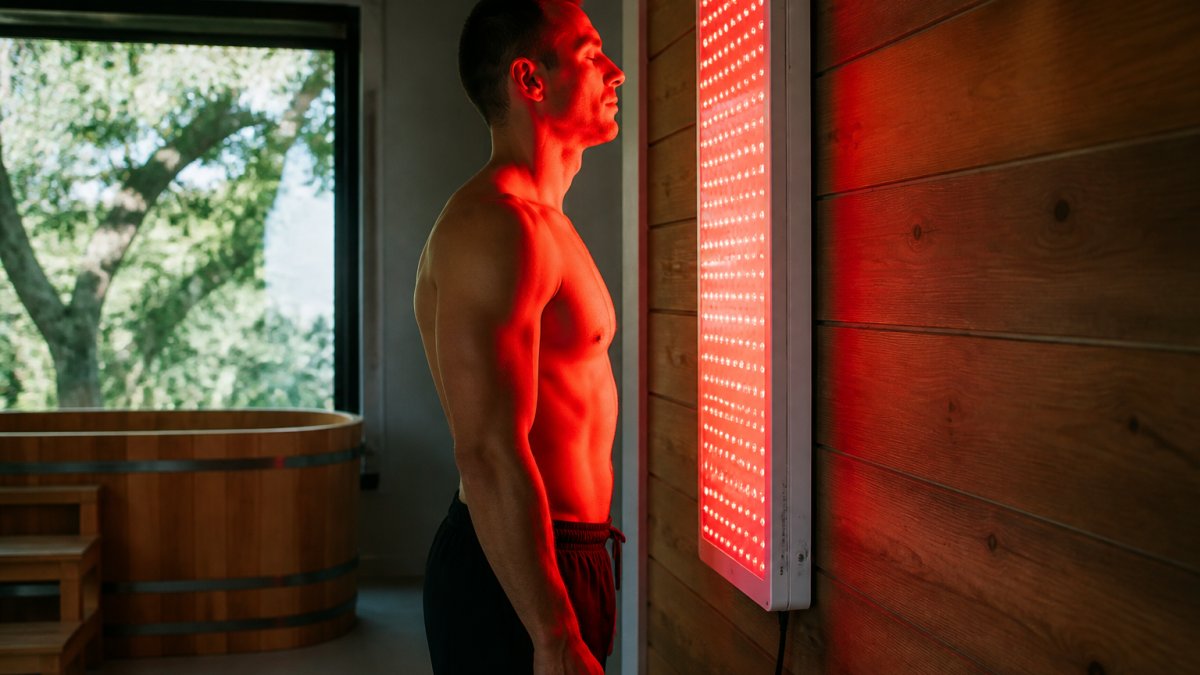
For muscle recovery, the near-infrared wavelengths (810nm and 850nm) penetrate deeper into muscle tissue, supporting inflammation reduction and accelerating tissue repair.
Safety, Contraindications, and Long-Term Durability
Red light therapy is non-invasive and generally safe for daily use. There are no known serious adverse effects from red or near-infrared light exposure at therapeutic wavelengths. Some people report mild eye strain if they stare directly into the panel during sessions, simply position the panel to the side or wear light-blocking glasses if you're sensitive.
Home Device vs Professional Spa: Which Makes Financial Sense
The financial decision hinges on three factors: frequency, consistency, and your time value.
Frequently Asked Questions
How much does a red light therapy spa session cost compared to owning a panel?
Professional red light therapy spa sessions typically range from $75 to $200 per session, with many clinics charging $150 per visit. Over a year of twice-weekly sessions, that's $15,600 to $20,800. A home red light therapy panel like the ULTRA360 costs $1,019 upfront and delivers unlimited sessions at home. Even accounting for electricity costs, most users break even within 6-12 months of regular use, making home ownership dramatically more cost-effective for long-term recovery routines.
Is home red light therapy as effective as professional spa equipment?
Home red light therapy panels deliver the same photobiomodulation benefits as spa equipment when wavelengths and intensity match professional standards. The ULTRA1500 with 300 quad-chip LEDs and multi-wavelength output (630nm, 660nm, 810nm, 850nm) produces clinical-grade results comparable to spa-based systems. The main difference: spa sessions bundle red light with other modalities (heat, massage, infrared saunas). For pure red light therapy efficacy, a quality home panel performs equivalently, giving you control over session frequency and consistency without appointment scheduling.
What is red light therapy treatment frequency, and how often should I use it?
Red light therapy treatment frequency depends on your goals and the device specifications. Most clinical protocols recommend 3-5 sessions per week for muscle recovery and inflammation reduction, with each session lasting 10-20 minutes. Some users see results with twice-weekly sessions, while athletes managing intense training may benefit from daily use. Home panels allow you to adjust frequency based on your recovery needs without waiting for spa appointments, making consistent protocol adherence much easier than relying on professional services.
Does red light therapy help with pain and chronic inflammation?
Red light therapy addresses pain and inflammation through photobiomodulation, which enhances mitochondrial function and reduces inflammatory markers in tissue. Research supports its use for joint pain, muscle soreness, and general inflammation management. The near-infrared wavelengths (810nm, 850nm) penetrate deeper into tissue, making them particularly effective for chronic pain. However, results vary by individual and condition severity. A home panel gives you the flexibility to apply consistent treatment protocols over weeks and months, which is often necessary for meaningful pain reduction in chronic cases.
What should I look for in the best red light therapy panels for 2026?
The best red light therapy panels in 2026 prioritize multi-wavelength output (630nm, 660nm, 810nm, 850nm), high LED density, adjustable brightness, and durable construction for daily use. The ULTRA1500 features 300 quad-chip LEDs with touchscreen control and cooling fans for extended sessions. The Illuminate Red V2 delivers results in just 5 minutes with 1,980 micro-LEDs. For full-body coverage and expandable setups, the ULTRA1500 is ideal. For speed and clinical precision, the Illuminate Red V2 suits busy schedules. Evaluate based on coverage area, session time requirements, and whether you need expandable options.
Home red light therapy eliminates the research spiral and delivers results through consistency. Sport Gains sources professional-grade panels built for daily use, with durable construction and accessible pricing that makes premium recovery attainable. The ULTRA360 and ULTRA1500 panels offer multi-wavelength output, touchscreen controls, and the durability to support your recovery for years. See how it works and start your daily protocol with a 30-day return guarantee.