Benefits of Daily Cold Plunges for Inflammation
Table of Contents
- How Daily Cold Plunges Affect Inflammation
- Cold Water Therapy for Inflammation: What the Evidence Shows
- Ice Baths for Muscle Soreness and Post-Workout Recovery
- Cold Plunge Duration: How Long and How Often
- Cold Plunge Safety: Who Should Avoid Daily Plunges
- How to Measure Whether Daily Plunging Is Helping
- Choosing a Cold Plunge for Daily Recovery
- Conclusion: Building a Daily Cold Plunge Habit That Lasts
- Frequently Asked Questions
Last Updated: October 6, 2026
How Daily Cold Plunges Affect Inflammation
Cold water immersion triggers a sudden narrowing of blood vessels near the skin. This response, called vasoconstriction, pushes blood toward your core and may temporarily reduce swelling in sore or injured tissue.
Here is the key distinction most articles skip: acute inflammation is your body's normal repair response after hard training. Chronic inflammation is a long-running, low-grade immune activation linked to joint pain, poor recovery, and worse long-term health.
Below, we break down what daily cold exposure actually does, who should avoid it, and how to build a routine you can stick with.
Acute Swelling vs. Chronic Inflammation
Acute inflammation is the short-term swelling, heat, and soreness that follows injury or intense exercise. It is a healing process, not a problem to eliminate. Chronic inflammation is a persistent, low-grade immune response that lingers for months or years. The two behave very differently under cold exposure.
Cold water constricts blood vessels and slows local metabolic activity in the tissue. That can ease acute swelling and numb sore spots for a while. But it does not appear to switch off the underlying immune signaling that drives chronic inflammation.
Cold Water Therapy for Inflammation: What the Evidence Shows
Cold water therapy for inflammation has decent support for short-term symptom relief and much weaker support for changing inflammatory markers. That gap matters. Feeling less sore is not the same as lowering the immune signals that drive chronic disease.
Three Different Things People Call "Inflammation"
Most articles blur these together. They are not the same, and cold plunging affects them differently.
- Local swelling and soreness. Fluid and immune cells gather in a specific muscle or joint after hard training or injury. This is measurable with a tape measure, a pain scale, or how well you can move the joint.
- Circulating inflammatory markers. Proteins and signaling molecules in the blood, C-reactive protein (CRP), interleukin-6 (IL-6), tumor necrosis factor-alpha (TNF-alpha), that rise with systemic, whole-body inflammation. These require a blood draw to measure.
- Clinical outcomes. Whether someone actually develops heart disease, arthritis, or another inflammation-linked condition, or whether an existing condition improves. These take years to track.
Cold plunging has the strongest evidence for the first category, mixed evidence for the second, and essentially no long-term outcome data for the third.
What the Research Actually Measures
Most cold plunge studies use soreness ratings, perceived recovery scores, and sometimes swelling measurements. Far fewer draw blood before and after a cold-exposure protocol to check CRP or IL-6. Even fewer follow participants long enough to see whether any marker change translates into a health benefit.

A common pattern in the literature:
- Strong evidence: reduced soreness and perceived fatigue in the 24 to 72 hours after exercise
- Moderate evidence: temporary reduction in local swelling around a trained or injured area
- Weak evidence: lasting changes in circulating inflammatory markers in healthy adults
Does Daily Use Change the Picture?
This is the question most articles skip. Almost all cold plunge research uses short protocols, a handful of sessions over one to two weeks, not a daily habit sustained for months.
What daily use does reliably produce is habituation. Your cold shock response, the gasp, the spike in heart rate and blood pressure, blunts with repeated exposure. That makes daily plunging more tolerable, but tolerance is not the same as a stronger anti-inflammatory effect.
How to Read a Cold Plunge Claim
When you see a product, clinic, or influencer promise that cold plunging "resets" or "crushes" inflammation, ask three questions:
- Did they measure a blood marker, or just ask people how sore they felt?
- Did the study last long enough to matter, weeks, months, or a single session?
- Was the comparison group doing nothing, or doing something else that also helps?
If the answer to any of those is unclear, treat the claim as marketing rather than evidence. For context on how inflammation is actually measured and managed, the National Institutes of Health inflammation overview is a solid starting point.
What This Means for Your Routine
If your goal is feeling less sore after training, a few sessions a week is a reasonable, evidence-aligned starting point. If your goal is lowering chronic inflammation tied to a diagnosed condition, cold plunging is not a substitute for the interventions your clinician recommends, and you should treat any claim otherwise with real skepticism.
Ice Baths for Muscle Soreness and Post-Workout Recovery
Ice baths for muscle soreness are the best-supported use of cold exposure. Athletes have used them for decades, and the effect on next-day soreness is fairly consistent.
Cold water slows blood flow to tired muscles, which can reduce swelling and quiet pain signals. The trade-off is real, though.
- Use ice baths after competition or a heavy game, when you want to feel fresh fast
- Skip them immediately after a muscle-building session if growth is your goal
- Save them for days when soreness is limiting your next workout
The thing nobody tells you about recovery: feeling better and adapting better are not always the same thing.
Cold Plunge Duration: How Long and How Often
For most healthy adults, a cold plunge duration of 2 to 5 minutes at 50 to 59°F is a reasonable starting range. Beginners should start shorter and warmer, then build up slowly over several weeks.

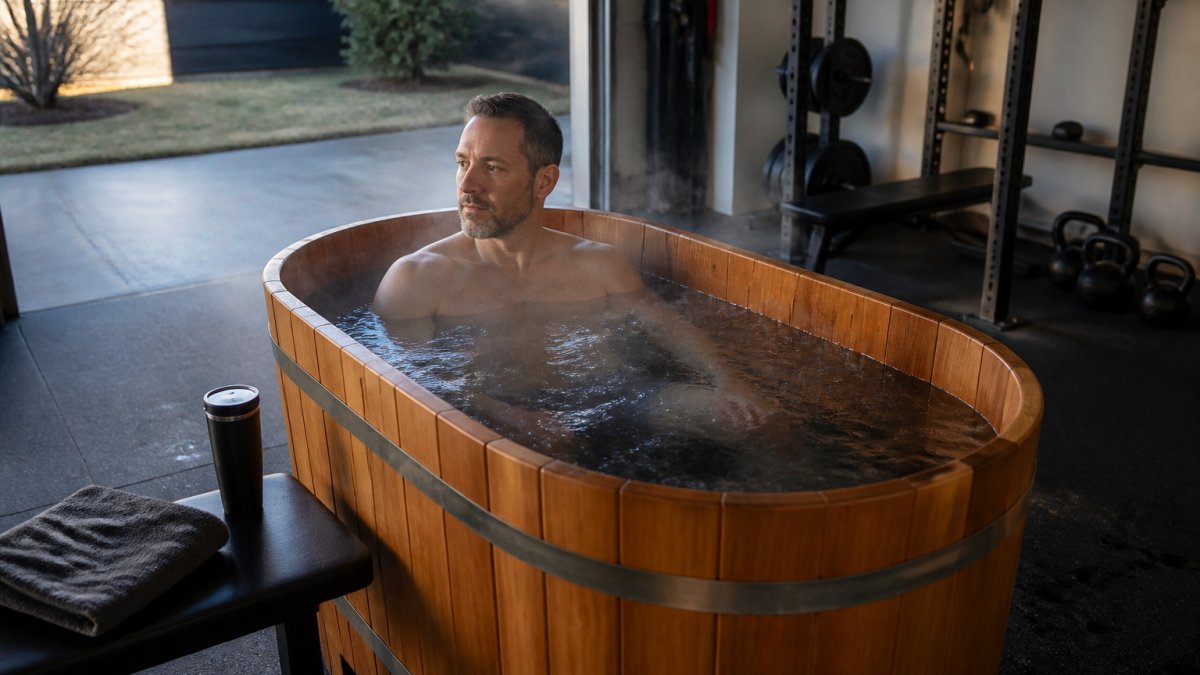
Daily use is where people get into trouble. More is not automatically better. A practical approach:
Cold Plunge Tub Designed for Recovery, WiFi App Control, 80 Gallon Capacity →
- Week 1-2: 1-2 minutes, 3 times per week, warmer water
- Week 3-4: 2-3 minutes, most days
- Week 5 onward: 3-5 minutes daily if you tolerate it well
Water temperature, exposure duration, and immersion frequency are the three dials you control. Change one at a time.
Cold Plunge Safety: Who Should Avoid Daily Plunges
Cold plunge safety is not optional, and some people should not do it at all. The reason is physiological: sudden cold water immersion triggers the cold shock response, an involuntary gasp, a sharp rise in heart rate, a spike in blood pressure, and rapid breathing. For a healthy adult this is uncomfortable but manageable. For someone with an underlying condition, it can be genuinely dangerous, and daily repetition does not make the underlying risk go away.
Who Should Not Plunge Without Medical Clearance
Talk to your doctor before starting daily plunges, and get explicit clearance, not a vague "should be fine", if you have any of the following:
- Cardiovascular conditions. Coronary artery disease, prior heart attack, arrhythmias, or heart failure. The cold shock response puts sudden demand on the heart.
- High blood pressure that is not well controlled. The acute pressure spike can push readings into a risky range.
- A history of stroke or transient ischemic attack. The same pressure and heart-rate surge applies.
Who Should Be Cautious Rather Than Avoid
Some people can plunge with modifications:
- Older adults. The cold shock response tends to be stronger and recovery slower. Start warmer and shorter.
- People on blood pressure or heart medications. Beta blockers and some other drugs blunt the heart-rate response, which can mask how hard your body is working.
- Anyone new to cold exposure. The first several sessions carry the highest risk because the gasp reflex is strongest.
Stop Criteria: When to Get Out Immediately
Do not push through these. Get out, dry off, and warm up:
- Numbness in fingers, toes, or lips that does not fade within a minute of getting out
- Dizziness, lightheadedness, or a feeling like you might pass out
- Shortness of breath that does not settle after the initial gasp
- Chest pain, pressure, or an irregular heartbeat
If any of these persist after you are warm and dry, seek medical attention.
The Supervision Rule
Never plunge alone, especially for your first several sessions. Cold shock can trigger gasping and rapid breathing within seconds, which makes it hard to call for help if something goes wrong.
The American Heart Association notes that sudden cold exposure stresses the cardiovascular system, which is why supervision and a gradual approach matter. If you have any doubt about whether daily plunging is safe for you, that is a conversation for your clinician, not a forum thread.
How to Measure Whether Daily Plunging Is Helping
You cannot tell if daily plunging is working unless you track something. Guessing based on how you feel on any single day is unreliable.
Pick two or three simple measures and log them for a month:
- Soreness on a 1-10 scale, same time each day
- Sleep quality and how rested you feel in the morning
- Joint stiffness or pain level, if that is your concern
- Mood and stress, rated simply
If soreness drops and sleep improves over four weeks, it is probably helping. If nothing changes, you are spending time and cold for no clear return. That is worth knowing before you commit to a daily habit.
Choosing a Cold Plunge for Daily Recovery
A daily habit only works if the equipment is easy to use. Hauling bags of ice every morning is the fastest way to quit.
At Sport Gains, we curate home recovery equipment built for exactly this kind of routine.
The real difference between a plunge you use daily and one that gathers dust comes down to setup time and temperature control.
Conclusion: Building a Daily Cold Plunge Habit That Lasts
The hardest part of daily cold plunging is not the cold. It is staying consistent long enough to know whether it helps your inflammation and recovery.
Sport Gains makes that easier with equipment built for daily use: a WiFi-controlled tub that holds temperature without ice, durable LLDPE construction, and accessible pricing backed by a 30-day return policy. See how it works and build a recovery routine you will actually keep.
Frequently Asked Questions
Can daily cold plunges reduce inflammation?
Daily cold plunges can reduce acute inflammation and swelling after exercise by constricting blood vessels and lowering tissue temperature. Research on inflammatory markers shows mixed results, and most studies examine short-term use rather than daily routines. Cold plunges inflammation benefits are best described as temporary symptom relief for swelling and soreness, not a proven treatment for chronic inflammatory conditions. Talk to your doctor before using cold water therapy for inflammation tied to an ongoing diagnosis.
How long should you stay in a cold plunge for inflammation?
Most protocols suggest 2 to 10 minutes per session at water temperatures between 50°F and 59°F. Beginners should start with 30 to 60 seconds and build tolerance gradually over several weeks. Longer is not better for inflammation; extended exposure raises the risk of cold shock, numbness, and reduced training adaptation. A common approach is 11 minutes total per week, split across 3 to 4 sessions, which keeps cold plunge duration manageable and consistent.
Is it safe to take a cold plunge every day?
Daily use is safe for most healthy adults who acclimate gradually and never plunge alone. Cold plunge safety depends on avoiding alcohol beforehand, exiting at the first sign of numbness or dizziness, and keeping water below 60°F only for short sessions. People with heart conditions, uncontrolled high blood pressure, Raynaud's phenomenon, or pregnancy should get medical clearance first. If you have chronic joint pain or a heart condition, ask your doctor whether daily cold exposure fits your situation.
Do ice baths for muscle soreness help with joint pain too?
Ice baths for muscle soreness reduce swelling and short-term pain after hard training, and many people report similar relief for joint pain and stiffness. The effect comes from vasoconstriction, which limits blood flow to the area and calms acute inflammation. That relief is temporary and does not reverse joint damage or treat arthritis. If joint pain persists beyond a few days or worsens, see a physician rather than relying on cold water therapy alone.