Cold Plunge for Knee Inflammation: A How-To Guide
Table of Contents
- How Cold Plunges Reduce Knee Inflammation
- How Long to Cold Plunge for Inflammation: Optimal Duration and Temperature
- Cold Plunge vs Heat for Knee Injury: When to Use Each
- Best Practices for Cold Therapy Recovery
- Safety Precautions and Contraindications for Knee Conditions
- Integrating Cold Plunges with Physical Therapy
- Getting Started: Cold Plunge Setup for Home Recovery
- Frequently Asked Questions
Last Updated: September 28, 2026
How Cold Plunges Reduce Knee Inflammation
Cold plunge knee inflammation relief works through vasoconstriction and nerve signal suppression, addressing the mechanisms behind cold plunge knee inflammation. When you immerse your knee in cold water, your body reduces blood flow to the inflamed area and slows pain signal transmission, targeting the root causes of inflammation rather than just masking symptoms.

Cold water causes vasoconstriction, blood vessels narrow to reduce blood flow to the inflamed area, decreasing swelling and joint effusion. This slows inflammatory markers, giving damaged tissue time to repair without constant fluid buildup pressing on nerves and joints.
Vasoconstriction and Blood Flow Regulation
When you step into cold water, blood vessels constrict to preserve core body temperature. This vascular response reduces blood flow to the knee joint, decreasing inflammatory fluid accumulation and swelling within minutes. Your knee regains mobility faster because pressure on surrounding tissues eases.
During cold exposure, blood vessels narrow, metabolic rate slows, fluid accumulation decreases, and joint mobility improves. After exiting, blood vessels dilate and oxygen-rich blood floods back, delivering nutrients for tissue repair and amplifying healing.
Nerve Signal Suppression and Pain Relief
Cold water has a direct analgesic effect on nerve conduction velocity. At 50-60°F, cold slows nerve signal transmission, reducing pain perception within seconds of immersion. This relief typically lasts 15-30 minutes after you exit the water.
Regular cold plunges create cumulative benefits for chronic knee pain, with baseline pain levels often decreasing over weeks and months.
How Long to Cold Plunge for Inflammation: Optimal Duration and Temperature
The ideal duration for a cold plunge for knee inflammation is 3-5 minutes per session. Localized knee immersion achieves therapeutic effects with less thermal shock than full-body immersion.

Full-Body vs. Localized Knee Immersion
Localized knee immersion, submerging only the knee joint and lower leg to mid-thigh, delivers anti-inflammatory benefits with less thermal shock than full-body immersion. Optimal depth is mid-thigh (approximately 12-16 inches above the knee joint), allowing longer tolerable durations while keeping your core temperature stable.
Temperature Guidelines by Inflammation Type
Ideal temperature depends on your inflammation stage:
Acute inflammation (first 48-72 hours): 50-55°F, 3-5 minutes, 2-3 times daily to suppress active swelling.
Subacute inflammation (3-14 days): 55-59°F, 3-5 minutes, 1-2 times daily.
Chronic inflammation: 58-62°F, 5-8 minutes, 3-4 times per week.
Progressive Protocol for New Users
New users should progress gradually: Week 1-2 (90 seconds at 58-62°F), Week 3-4 (2-3 minutes at 55-59°F), Week 5-6 (3-5 minutes at 52-57°F), Week 7+ (3-5 minutes at 50-55°F). If you experience excessive shivering, numbness lasting over 30 minutes, or increased pain, move back one week. Cold therapy should feel uncomfortable but not painful.
Frequency: Why More Isn't Better
Most athletes benefit from 3-4 cold plunges per week for chronic conditions, or 2-3 daily sessions during acute flare-ups. Daily immersion can suppress immune function and slow tissue repair. Give your body 48 hours between sessions when possible.
For athletes combining cold plunges with physical therapy: cold plunge 20-30 minutes before therapy, perform your session, then optional light cold exposure (5 minutes) post-therapy if needed. Repeat 3-4 times per week with 48-hour rest between sessions.
Cold Plunge vs Heat for Knee Injury: When to Use Each
Use cold plunges for acute swelling (first 48 hours), joint effusion, sharp pain, and post-exercise inflammation. Use heat for chronic stiffness (past 72 hours), muscle tightness, limited range of motion, and before physical therapy. Many athletes mistakenly apply heat to acute inflammation, which worsens swelling. Use cold for the first 3-5 days after injury, then transition to heat. The key distinction: cold interrupts acute inflammation; heat mobilizes tissues adapted to chronic inflammation.
Best Practices for Cold Therapy Recovery
Effective cold plunge use requires consistency and proper technique. These practices ensure you get maximum benefit while minimizing risks.
Pre-Plunge Preparation
Spend 5-10 minutes doing light activity before your plunge: walk, gentle knee circles, light stretching, and breathing exercises. Eat a light meal 60-90 minutes before immersion and hydrate well before and after. Never enter cold water when already chilled or fatigued.
During and After Immersion
Enter the water slowly, starting with your feet, then calves, then thighs. Once submerged, breathe slowly and deeply. Use a timer for your target duration (3-5 minutes). Exit slowly, dry off immediately, and stay warm for 15-20 minutes. The rebound effect in the first 10-15 minutes delivers healing blood flow; let your body rewarm naturally.
Safety Precautions and Contraindications for Knee Conditions
Cold plunges are safe for most people, but effectiveness varies by knee condition. Cold is highly effective for inflammatory conditions but only manages pain in mechanical injuries without addressing structural problems.
Cold Plunge Tub Designed for Recovery →
Inflammatory Knee Conditions: Cold Is Beneficial
Rheumatoid arthritis (RA): Cold plunges reduce joint pain and swelling effectively and are safe for long-term use. Use on high-inflammation days or mornings when stiffness is worst. Coordinate with your rheumatologist if on immunosuppressant medications.
Mechanical Injuries: Cold Helps Manage Symptoms, Not Repair Structure
Anterior cruciate ligament (ACL) tear: Cold reduces post-injury swelling and pain during the acute phase (first 2 weeks). Use cold to manage pain so you can participate in physical therapy, but don't avoid rehabilitation; pain is protective.
Absolute Contraindications: Avoid Cold Plunges
Severe cardiovascular disease or uncontrolled hypertension:
- Cold immersion triggers vasoconstriction and increased heart rate (pubmed.ncbi.nlm.nih.gov)
- Risk of cardiac events in people with compromised cardiac function
- Alternative: Consult your cardiologist about localized ice application instead
Raynaud's syndrome or severe peripheral circulation problems:
- Cold causes excessive vasoconstriction in people with Raynaud's
- Risk of tissue damage, numbness, or color changes that don't resolve
- Alternative: Localized ice packs (5-10 minutes) with careful monitoring
Active infection or fever:
- Cold immersion can suppress immune function when your body is fighting infection
- Wait until fever resolves and infection is treated
Open wounds or skin infections on the knee:
- Cold water exposure increases infection risk
- Wait until wounds are fully closed and skin is intact
Recent surgery (typically 4-6 weeks post-op):
- Cold can interfere with early-phase tissue healing and scar formation
- Consult your surgeon before resuming cold therapy
Use With Caution: Modified Protocols Required
Diabetes:
- Cold can mask pain from tissue damage due to neuropathy
- Risk: You might not feel dangerous cold exposure
- Modified protocol: Limit immersion to 2-3 minutes maximum; use a thermometer to verify water temperature; inspect your skin immediately after for any damage
Peripheral neuropathy (reduced sensation in feet or legs):
- You cannot reliably feel pain from excessive cold exposure
- Risk of frostbite or tissue damage without realizing it
- Modified protocol: Use a timer (never exceed 3 minutes); have someone monitor you; inspect skin immediately after; consider localized ice packs instead of full immersion
Severe osteoarthritis with significant bone-on-bone contact:
- Some people experience increased stiffness or pain immediately post-immersion
- Not dangerous, but may reduce quality of life
- Modified protocol: Try 2-3 minute sessions; follow immediately with 15 minutes of gentle heat and mobility work; if stiffness worsens, discontinue cold plunges and focus on heat therapy instead
Pregnancy:
- Cold immersion causes systemic temperature changes
- Safety data is limited; most practitioners recommend avoiding full-body immersion
- Modified protocol: Consult your obstetrician; localized knee ice (5-10 minutes) is typically considered safer than full immersion
Joint hypermobility or ligament laxity (including Ehlers-Danlos syndrome):
- Cold relaxes muscles that normally stabilize loose joints
- Risk: Increased instability or subluxation during immersion
- Modified protocol: Keep immersion brief (2-3 minutes maximum); focus on controlled breathing to maintain muscle engagement; consider localized ice instead
Warning Signs: When to Stop and Seek Medical Attention
Stop cold plunge immersion immediately and seek medical attention if you experience:
- Uncontrollable shivering lasting more than 5 minutes post-immersion (sign of excessive core temperature drop)
- Confusion or difficulty concentrating during or immediately after immersion (sign of hypothermia)
- Numbness that doesn't resolve within 30 minutes of rewarming (sign of nerve damage)
- Chest pain or difficulty breathing during immersion (sign of cardiac stress)
- Skin color changes (white, blue, or red patches that don't resolve within 30 minutes) on the knee or lower leg (sign of circulation problems)
- Increased pain or swelling that worsens over 24 hours despite cold therapy (sign that cold is not appropriate for your condition)
Integrating Cold Plunges with Physical Therapy
Cold plunges work best combined with structured physical therapy. Use cold 20-30 minutes before your session to reduce pain and enable better exercise performance, then optionally after therapy to reduce fresh inflammation. Cold reduces symptoms; therapy addresses causes. The ideal protocol: cold plunge before therapy, perform exercises, optional cold post-session. Repeat 3-4 times per week.
Getting Started: Cold Plunge Setup for Home Recovery
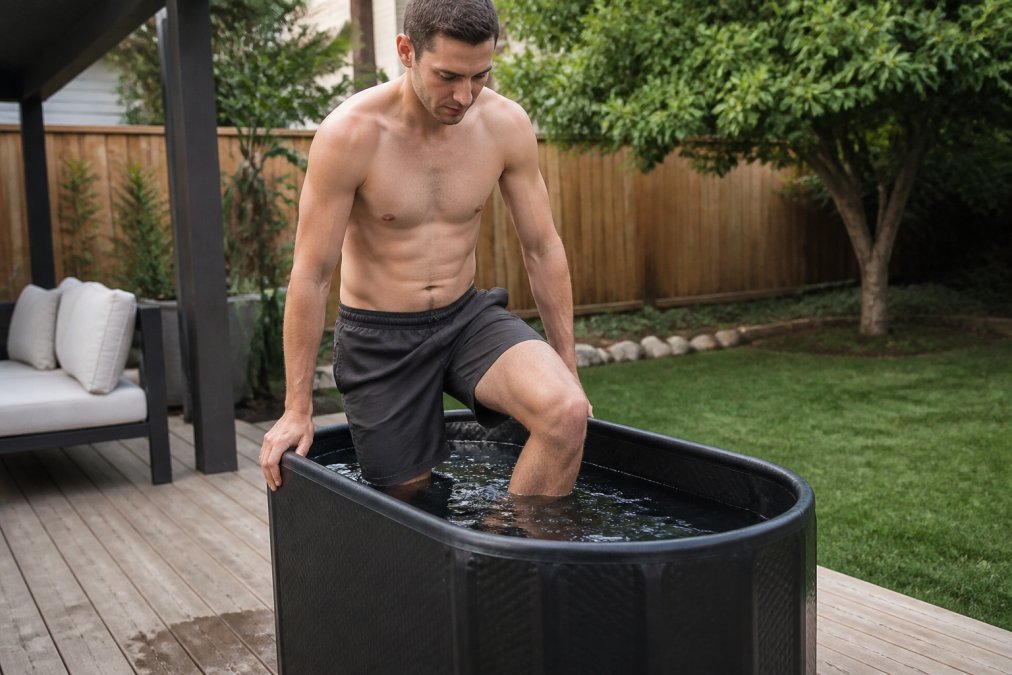
Home cold plunge systems eliminate travel time, cost per session, and scheduling constraints, delivering better long-term results than occasional clinic visits.
Frequently Asked Questions
Do cold plunges actually decrease inflammation in the knee?
Yes. Cold water immersion triggers vasoconstriction, which reduces blood flow to inflamed tissue and decreases swelling. The cold also suppresses nerve signal transmission, providing analgesic relief. This response is most effective for acute inflammation and joint effusion. For chronic knee inflammation, regular cold plunge sessions can lower systemic inflammatory markers over time, though results vary based on frequency and individual response.
How long should you cold plunge for knee inflammation?
Start with 2-3 minutes at 50-59°F (10-15°C) for the first week. As tolerance builds, progress to 3-5 minutes. Do not exceed 10 minutes in a single session, as extended exposure can trigger a rebound inflammatory response. Most athletes and chronic pain sufferers see benefits with 3-4 sessions per week. Consistency matters more than duration; shorter, regular sessions outperform occasional longer immersions.
What is better for knee inflammation: cold or heat?
Cold works best for acute swelling and joint effusion within 48 hours of injury. Heat is better for chronic stiffness and muscle tension. For knee inflammation specifically, cold plunges reduce edema and pain signals immediately, while heat improves circulation and mobility for rehabilitation. Many people use cold first (to reduce swelling) followed by gentle heat and physical therapy (to restore function). Your physical therapist can recommend the right sequence for your condition.
Are there risks to cold plunge therapy for arthritis or knee conditions?
Cold plunges are generally safe but contraindicated for some conditions. Avoid immersion if you have severe arthritis with active inflammation managed by medication, Raynaud's syndrome, or recent surgery without medical clearance. Cold exposure can increase pain in some osteoarthritis cases. Always consult your doctor before starting, especially if you take anti-inflammatory medication or have cardiovascular conditions. Start conservatively and monitor your knee's response over the first 2-3 sessions.