Why Home Recovery Beats Spa Visits
Table of Contents
- The Real Cost: Home Recovery vs Spa Memberships
- Why Home Recovery Equipment Delivers Better Long-Term Results
- Cold Plunge vs Sauna for Recovery: Which Works Best at Home
- Infrared Sauna Frequency for Muscle Recovery and Daily Wellness
- Convenience, Consistency, and Control at Home
- Space-Saving Solutions for Any Home Setup
- The Durability Advantage: Built to Last Versus Frequent Replacements
- Frequently Asked Questions
Last Updated: October 5, 2026
The Real Cost: Home Recovery vs Spa Memberships
At $150 per cryo session or $200 for a spa day, a monthly spa habit runs $600 to $1,200, $36,000 to $72,000 over five years, spent on temporary relief.
Home recovery equipment flips that equation. You invest once, typically $2,000 to $5,000, and use it daily for a decade or more, so the per-use cost drops dramatically after year one.
Spa visits require planning, driving, and money each time; home equipment removes every barrier except the decision to use it.
The real advantage isn't financial, it's consistency, which is ultimately why home recovery beats spa visits.
Why Home Recovery Equipment Delivers Better Long-Term Results
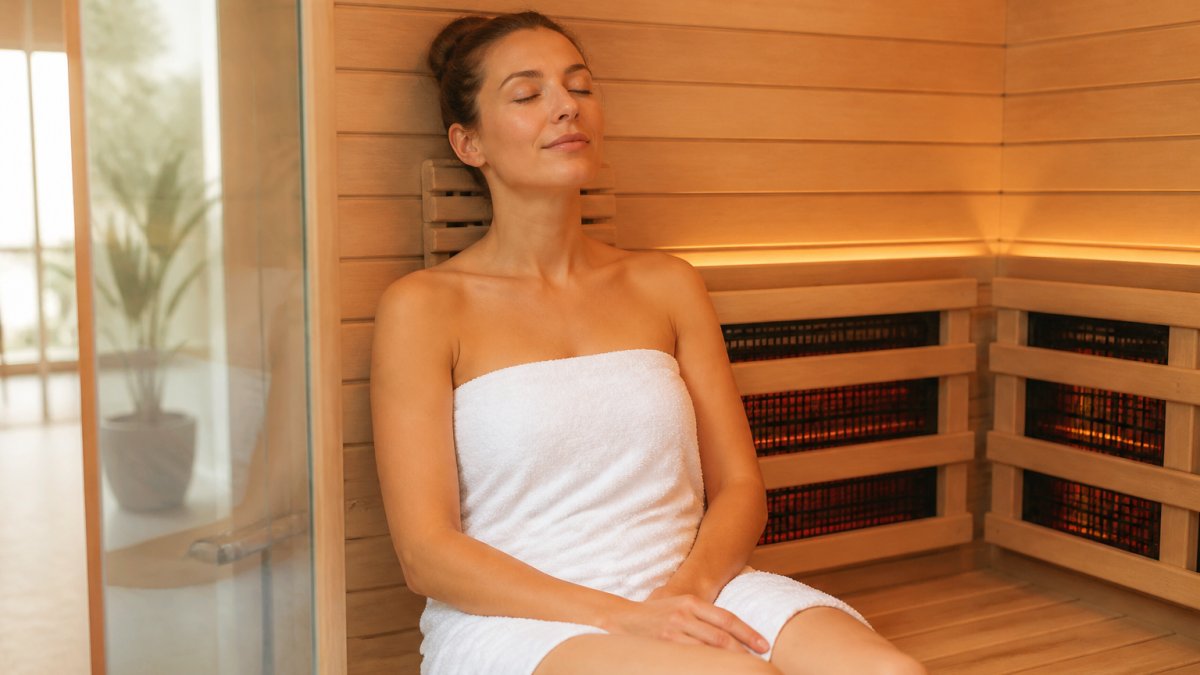
Home recovery beats spa visits because it eliminates the gap between intention and action.
The durability advantage matters more than most people realize. A quality infrared sauna runs reliably for 10-15 years with minimal maintenance.
Intentional recovery routines create measurable changes in sleep quality, cortisol regulation, and muscle repair, and those outcomes compound.
Sport Gains offers infrared saunas specifically designed for daily home use. The 3-Person FAR Infrared Sauna in Cedar ($5,189.00) uses carbon panels that penetrate 40% deeper than ceramic heaters and never require replacement.

Convenience compounds the psychological benefits: deep relaxation happens when recovery feels effortless.
Cold Plunge vs Sauna for Recovery: Which Works Best at Home
Cold exposure and heat therapy target different recovery needs. Both work; the question is which delivers better long-term results at home.
Sauna therapy raises core temperature, triggering vasodilation and improved circulation.
Cold plunge therapy uses deliberate cold exposure to strengthen the nervous system through controlled stress: heart rate variability improves, inflammation markers decrease, and the metabolic response supports outcomes heat alone cannot achieve.
Heat therapy is more forgiving, and cold exposure requires more caution and shorter sessions. For daily wellness routines, infrared sauna frequency is easier to sustain.
For chronic inflammation or joint pain, heat therapy delivers more reliable results; for nervous system training and biohacking, cold exposure becomes essential.
Sport Gains carries multiple infrared sauna options for different spaces and budgets. The Andora 2-Person Low EMF FAR Infrared Sauna ($2,969.37) fits smaller homes and runs on standard 120V service. The 2024 Upgrade 2 Person Sauna ($2,139.00) offers six heating plates for uniform warmth and faster warm-up.

Infrared Sauna Frequency for Muscle Recovery and Daily Wellness
The ideal infrared sauna frequency depends on your goals, but consistency beats intensity.
Each session should last 20-45 minutes at a comfortable temperature. Benefits emerge over time, not immediately; longer sessions don't produce proportionally better outcomes, just more discomfort and overheating risk.
The real advantage of home equipment is flexibility: a 20-minute session on a stressful day, more frequency during heavy training blocks, less during recovery weeks.
Muscle repair accelerates when heat therapy is paired with adequate sleep and nutrition.
Temperature matters less than you'd think. Most people benefit from 110-130°F sessions. Going hotter doesn't speed recovery. Consistency at a comfortable temperature beats sporadic intense sessions every time.
Convenience, Consistency, and Control at Home
The real edge of home recovery isn't that it's easier, it's that you can titrate exposure to your own physiology in real time.
Consistency produces measurable adaptation because heat exposure is a hormetic stressor. Repeated, predictable exposure lets your cardiovascular and nervous systems adapt, plasma volume expands, heat-shock protein expression rises, peripheral circulation improves, but those adaptations take weeks of regular sessions.
Control also means you can pair modalities: sauna first, a brief cool rinse, then 10 minutes of quiet breathing. At home that sequence is trivial; at a spa it means negotiating the facility's schedule.
Infrared Sauna Built for Home Wellness, 3-Person Cedar, FAR Carbon Panels →
When Home Recovery Is the Wrong Choice
Home recovery is not appropriate for everyone, and the absence of professional supervision changes the risk profile. A few situations where a spa or clinical setting is the better call:
- Cardiovascular conditions. Heat and cold both stress the cardiovascular system. If you have uncontrolled hypertension, a history of arrhythmia, or have had a cardiac event, heat and cold exposure should be cleared by a physician before you do it at home, where no one is watching.
- Pregnancy. Sauna use during pregnancy is generally discouraged because of core temperature elevation (value is what Coveo indexes and uses as the title in Search Results.--> <title>Can I use...). Cold plunge is also typically avoided. A spa with trained staff can monitor; a home sauna cannot.
- Medications that impair thermoregulation. Certain antidepressants, antipsychotics, diuretics, and beta blockers affect sweating and blood pressure response. This is a conversation for your prescriber, not a product page.
- Diabetes with neuropathy. Reduced sensation means you may not feel a burn or recognize overheating. Professional settings with supervision are safer.
- Alcohol or substance use before a session. This is the most common cause of sauna-related incidents. At home, there's no staff to intervene.
- Fainting history or orthostatic hypotension. Standing up quickly after heat exposure can cause a drop in blood pressure. At home, you're alone.
If any of the above applies to you, a supervised setting or medical clearance comes first.
The Control Trade-Off
Control cuts both ways. You control the temperature, duration, and timing, which means you also own the responsibility for using it safely. Set a timer. Hydrate before and after. Never combine heat exposure with alcohol. Don't push temperature higher because you think hotter is better; most people get the full benefit at 110-130°F.
That ownership is also why home recovery works for people who stick with it. The equipment is visible, the routine is yours, and the feedback loop between how you feel and what you do is immediate. But the same ownership is why safety literacy has to come first.
Space-Saving Solutions for Any Home Setup
Size concerns stop most people from considering home recovery equipment. That's a mistake. Modern infrared saunas fit into surprisingly small spaces.
The Far Infrared Sauna 1 Person ($2,324.85) measures just 35×35 inches, roughly the footprint of a closet. It fits into master bathrooms, home offices, or spare bedrooms.

Two-person saunas are slightly larger but still fit standard residential spaces, the Andora model measures 47×42 inches exterior, and most people find room in a basement, garage, or walk-in closet.
Installation is straightforward: standard electrical service, a flat surface, no plumbing, and no special ventilation beyond the built-in roof vent. Assembly typically takes 30-45 minutes with basic tools.
The real space consideration is psychological.
The Durability Advantage: Built to Last Versus Frequent Replacements
Most articles mention that home equipment is cheaper over time. Almost none show the math. Here's the breakdown that matters, the 12- to 24-month ROI window where the home-vs-spa decision is decided.
The 24-Month Math
The comparison only becomes honest when you hold usage constant.
Take a mid-range home infrared sauna at roughly $2,500-$3,000, plus a modest allowance for electricity and replacement parts. Electricity for a typical 2-person unit runs a few dollars per month; maintenance is minimal, occasional cleaning, no consumables.
Now compare a realistic spa cadence: twice a week at $50-$150 per visit runs roughly $5,200-$15,600 per year, or $10,400-$31,200 over 24 months.
The home sauna's 24-month cost, by contrast, is the upfront purchase plus a small operating allowance, call it $2,700-$3,300 all-in.
Where the ROI Breaks Down
Use a home sauna once a month and the per-session cost is worse than a spa visit. ROI depends entirely on frequency: the break-even threshold is roughly one session per week. Below that, the spa wins on cost; above it, the home unit wins decisively and the gap widens every month.
That's why durability and ROI are the same question. Equipment lasting 10-15 years with daily use collapses the per-session cost; equipment degrading in 3-5 years resets the clock and destroys the math.
What Actually Drives Durability
Durability isn't a marketing claim, it's a function of specific components:
- Heating elements. Carbon panel heaters are generally rated for long service life without replacement. Ceramic heaters are cheaper upfront but degrade and typically need replacement, which resets your cost basis.
- Wood construction. Cedar and hemlock resist moisture and warping and don't require chemical treatment. Cheaper softwoods and composites can delaminate or warp in humid environments, where most premature failures start.
- Electrical components. Standard 120V service keeps installation simple and replacement parts widely available. Units requiring dedicated 240V circuits cost more to install and are harder to relocate.
- Warranty terms. Warranty length is a rough proxy for how long the manufacturer expects the unit to last. Compare coverage on heaters, controls, and structure separately, they're often different.
The Ownership Effect
There's a second ROI that doesn't show up in a spreadsheet. Owning the equipment changes behavior: a spa membership is a recurring expense you can cancel, while a sauna in your basement is a sunk cost you've already paid. That shift from renting recovery to owning it converts sporadic users into consistent ones, and consistency produces the physiological adaptations that make recovery worth doing.
| Recovery Method | Upfront Cost | 24-Month Cost | Break-Even Frequency |
|---|---|---|---|
| Home Infrared Sauna | $2,500-$3,000 | ~$2,700-$3,300 | ~1 session/week |
| Weekly Spa Visits | $0 | $5,200-$15,600 | , |
| Twice-Weekly Spa Visits | $0 | $10,400-$31,200 | , |
Frequently Asked Questions
How does the cost of home recovery equipment compare to recurring spa visits?
A single spa session costs $150-$300, while home recovery equipment ranges from $2,139 to $8,200. After one year of weekly spa visits ($7,800-$15,600), home equipment pays for itself and continues delivering results for 10+ years. The 2024 Upgrade 2 Person Sauna at $2,139 breaks even in roughly 3 months of typical spa spending, making it the most cost-effective entry point for consistent recovery.
What's the difference between cold plunge vs sauna for recovery?
Infrared saunas penetrate deep into muscle tissue to reduce soreness, improve circulation support, and promote tension release through heat therapy. Cold exposure activates sympathetic nervous system recovery when alternated with heat. For muscle repair and joint mobility, infrared heat is primary; cold plunges amplify results when used strategically. Home setup lets you combine both modalities daily without travel time.
How often should you use an infrared sauna for muscle recovery?
Most athletes benefit from 3-5 sessions per week, 20-30 minutes per session. Daily use is safe for many people, especially at lower temperatures (90-110°F). Infrared sauna frequency depends on training intensity and recovery goals. Home access removes scheduling friction, allowing you to use your sauna immediately after workouts when it's most effective for muscle repair and metabolic response.
Is home recovery actually more hygienic than spa visits?
Yes. Home equipment eliminates exposure to shared surfaces, bacteria, and sensory clutter common in commercial spas. You control water quality, cleaning frequency, and who uses the equipment. This is especially important for individuals managing chronic pressure or skin concerns.
Can I really use home recovery equipment consistently, or will it sit unused?
Consistency is higher at home because there's zero travel time and no scheduling friction. Home saunas become part of your daily routine, used after workouts, in the evening for deep relaxation, or on recovery days. The 30-day return policy lets you test whether home recovery fits your lifestyle risk-free.